
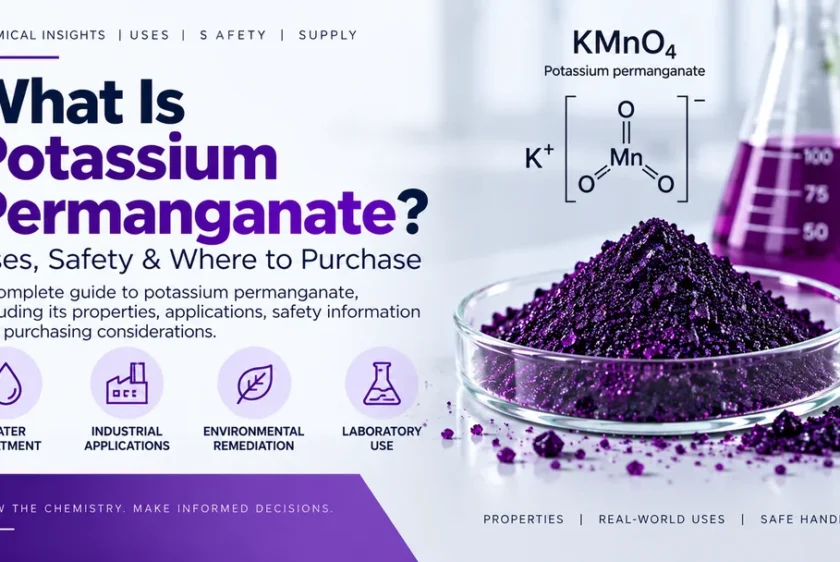
Potassium permanganate is a dark purple, crystalline chemical compound that acts as a powerful oxidizing agent. This means it readily gives up oxygen to other substances, which makes it incredibly effective at killing bacteria, removing bad smells, and breaking down organic contaminants. You might recognize it by its distinct deep purple color when dissolved in water.
It is widely used in water treatment plants, medical first aid, and industrial chemistry because it is both strong and relatively safe when handled correctly.
What Does Potassium Permanganate Look Like?
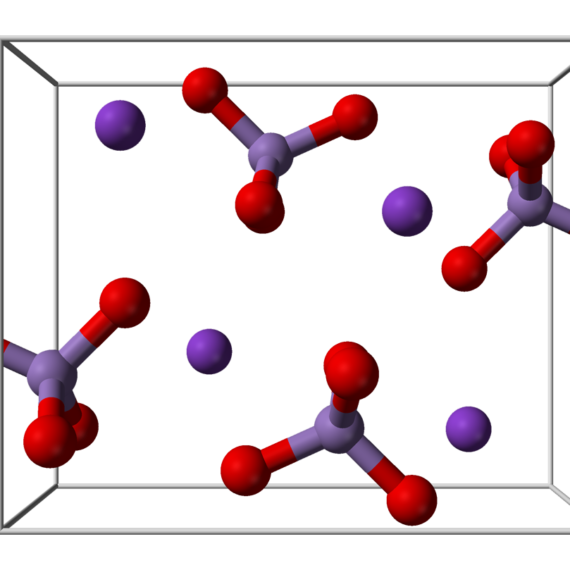
Potassium permanganate normally appears as a purple to dark-purple crystalline solid.
It is sometimes known by names such as:
- Potassium permanganate
- Permanganate of potash
- Condy’s crystals
- Chameleon mineral
Its strong purple color is one of its most recognizable physical characteristics. PubChem identifies potassium permanganate as a purplish crystalline solid and lists its formula as KMnO₄.
Potassium Permanganate Chemical Information
| Property | Information |
|---|---|
| Chemical name | Potassium permanganate |
| Formula | KMnO₄ |
| CAS number | 7722-64-7 |
| EC number | 231-760-3 |
| Molecular weight | 158.034 g/mol |
| Physical form | Purple crystalline solid |
| Chemical type | Inorganic potassium salt |
| Main chemical characteristic | Strong oxidizing agent |
ECHA identifies potassium permanganate as EC 231-760-3, CAS 7722-64-7, with molecular formula KMnO₄.
Why Is Potassium Permanganate Important?
The main reason potassium permanganate is useful is its strong oxidizing ability.
An oxidizing agent can participate in chemical reactions that change or break down other substances. This makes potassium permanganate valuable in applications where unwanted compounds need to be oxidized or transformed.
The U.S. EPA identifies potassium permanganate as a widely used oxidizing agent, with water and wastewater treatment representing its most common U.S. applications.
What Is Potassium Permanganate Used For?
Potassium permanganate has a wide range of professional applications.
Major uses include:
- Drinking water treatment
- Wastewater treatment
- Oxidation of contaminants
- Iron and manganese removal
- Hydrogen sulfide control
- Taste and odor control
- Environmental remediation
- Air and gas purification
- Chemical manufacturing
- Oil and gas water treatment
- Laboratory chemistry
- Selected industrial processing applications
The U.S. EPA identifies water treatment, oil and gas production water treatment, air and gas purification, chemical manufacturing, and remediation among the broader application areas for potassium permanganate.
Potassium Permanganate for Water Treatment
One of the most important applications of potassium permanganate is water treatment.
Potassium permanganate can be used as an oxidant in drinking water and wastewater treatment systems.
EPA documentation identifies it as an oxidizing agent used directly in drinking water and wastewater treatment.
Iron Removal
Potassium permanganate can help oxidize dissolved iron into forms that can subsequently be removed through appropriate water-treatment processes.
This makes it useful in systems where iron contributes to:
- Water discoloration
- Taste problems
- Staining
- Treatment-system problems
Manganese Removal
Potassium permanganate is also used in treatment systems involving manganese.
Oxidation can transform dissolved manganese into forms that are easier to remove through downstream treatment processes.
Hydrogen Sulfide Control
Potassium permanganate can be used to oxidize hydrogen sulfide in appropriate water-treatment systems.
Hydrogen sulfide can be associated with unpleasant odors and other water-quality problems.
Taste and Odor Control
Water-treatment professionals can use potassium permanganate as part of treatment processes designed to control certain compounds responsible for unwanted tastes and odors.
Treatment of Certain Contaminants
EPA information also identifies potassium permanganate as an oxidant for selected contaminants and cyanotoxins in water-treatment research and applications.
Potassium Permanganate in Wastewater Treatment
Potassium permanganate is also used in wastewater treatment.
Wastewater can contain compounds that need to be oxidized or transformed before additional treatment steps.
Potassium permanganate can therefore serve as an oxidizing chemical within suitable treatment systems.
The EPA’s supply-chain profile identifies municipal and industrial wastewater treatment as major application areas.
Potassium Permanganate for Environmental Remediation
Another important application is environmental remediation.
Oxidation-based remediation methods can be used to treat certain contaminants in environmental systems.
Potassium permanganate is among the chemicals that can be used in appropriate remediation processes because of its oxidizing properties.
The exact treatment method depends on the contaminant, site conditions, engineering design, and regulatory requirements.
Potassium Permanganate in Oil and Gas
Potassium permanganate also has applications associated with oil and gas production water treatment.
EPA documentation lists oil and gas well production water treatment among the uses of potassium permanganate.
Its oxidizing properties can make it useful in selected treatment processes where water quality or specific contaminants require chemical treatment.
Potassium Permanganate in Chemical Manufacturing
Potassium permanganate is used as an oxidizing agent in chemical processing.
Its strong oxidation properties make it useful in selected chemical reactions and industrial processes.
Professional users should always select the appropriate grade and specification for the intended application.
Potassium Permanganate in Laboratory Research
Potassium permanganate is an established laboratory reagent.
It can be used in professional chemistry and analytical work where an oxidizing agent is required.
Laboratories should select material appropriate for their analytical or research requirements and follow the manufacturer’s SDS and laboratory safety procedures.
Because potassium permanganate is a strong oxidizer, it should not be treated like an ordinary non-reactive laboratory salt.
Potassium Permanganate as an Oxidizing Agent
The permanganate ion is responsible for much of potassium permanganate’s chemical activity.
Its oxidation properties allow it to react with many other substances.
This is why potassium permanganate has applications across:
- Water treatment
- Environmental chemistry
- Analytical chemistry
- Chemical manufacturing
- Industrial processing
- Research laboratories
Its strong oxidation properties are also the reason that compatibility and storage considerations are extremely important.
Is Potassium Permanganate Dangerous?
Potassium permanganate requires careful handling.
PubChem lists potassium permanganate as an oxidizing solid and includes hazards involving acute toxicity and aquatic toxicity. It can intensify fire and can react dangerously with combustible or reducing materials.
ECHA’s harmonized EU classification includes:
- Oxidizing solid
- Acute toxicity
- Reproductive toxicity
- Very toxic to aquatic life
- Very toxic to aquatic life with long-lasting effects
The exact classification and labeling requirements applicable to a particular product should always be confirmed from the current SDS and applicable jurisdictional rules.
Potassium Permanganate and Fire Risk
Potassium permanganate itself is not a conventional fuel, but it is a strong oxidizer.
This means it can intensify combustion when it comes into contact with combustible materials.
PubChem’s safety information notes that potassium permanganate can accelerate the burning of combustible materials and may react dangerously with certain substances.
For this reason, professional storage should follow the applicable SDS and chemical-storage requirements.
Potassium Permanganate and the Environment
Potassium permanganate can pose significant environmental hazards if released improperly.
ECHA’s classification identifies it as very toxic to aquatic life, including long-lasting aquatic effects.
Spills, waste, and contaminated materials should therefore be managed according to applicable environmental regulations and the product’s SDS.
Potassium Permanganate Storage
Professional users should store potassium permanganate according to the manufacturer’s SDS and applicable chemical-storage regulations.
Important considerations include:
- Keep the product properly labeled.
- Keep it away from incompatible materials.
- Prevent contamination.
- Use suitable chemical-storage areas.
- Maintain appropriate environmental controls.
- Restrict access where required.
- Follow local fire-safety requirements.
Because potassium permanganate is an oxidizer, compatibility with other stored chemicals is particularly important.
Potassium Permanganate SDS
A Safety Data Sheet (SDS) is one of the most important documents to review before purchasing or using potassium permanganate.
An SDS can provide information about:
- Product identification
- Hazard classification
- Composition
- First-aid measures
- Fire-fighting measures
- Accidental-release measures
- Handling and storage
- Exposure controls
- Personal protective equipment
- Physical and chemical properties
- Stability and reactivity
- Toxicological information
- Ecological information
- Disposal considerations
- Transportation requirements
Professional buyers should obtain and review the current SDS for the exact product they intend to use.
Where to Purchase Potassium Permanganate
If you need potassium permanganate for a legitimate industrial, water-treatment, laboratory, environmental, or research application, it is generally sourced through established chemical suppliers, laboratory reagent suppliers, water-treatment chemical distributors, or industrial chemical companies.
When deciding where to purchase potassium permanganate, consider:
Chemical Identity
Confirm that the material is actually potassium permanganate and that the documentation identifies:
CAS 7722-64-7
Grade
Choose a grade appropriate for the intended application.
Depending on the supplier, products may be marketed for different professional applications, such as laboratory, industrial, or water-treatment use.
Certificate of Analysis
A Certificate of Analysis (COA) can provide batch-specific information about the material supplied.
Safety Data Sheet
Always request the current SDS before purchasing and review its hazard, storage, handling, and transportation information.
Packaging
The appropriate packaging depends on the application, quantity, transportation requirements, and applicable regulations.
Regulatory Compliance
Potassium permanganate is a regulated hazardous chemical in various jurisdictions. ECHA maintains regulatory information for the substance, while U.S. requirements can include federal, state, and local rules.
What Should You Check Before Purchasing Potassium Permanganate?
Before selecting a supplier, professional buyers should check:
- Chemical identity
- CAS number
- Product grade
- Specification
- COA availability
- SDS availability
- Packaging
- Transportation requirements
- Regulatory requirements
- Supplier documentation
These checks can help businesses choose material that is appropriate for their intended professional application.
Buying Potassium Permanganate for Water Treatment
Water-treatment organizations may require potassium permanganate for municipal, industrial, or wastewater treatment.
The EPA identifies potassium permanganate as an important water-treatment oxidant, particularly for drinking water and wastewater applications.
Professional water-treatment buyers should consider:
- Treatment-system requirements
- Required chemical specification
- Water-quality objectives
- Regulatory approval
- Supplier documentation
- Safe storage
- Transportation
- Environmental requirements
The correct chemical specification should be selected according to the treatment system and applicable standards.
Buying Potassium Permanganate for Laboratory Use
Laboratories may require potassium permanganate as a chemical reagent or oxidizing agent.
For laboratory applications, buyers should consider:
- Required grade
- Purity specification
- Batch documentation
- COA
- SDS
- Packaging
- Laboratory compatibility
- Storage requirements
A laboratory should select a product based on its actual analytical or research requirements rather than simply choosing the lowest-cost option.
Potassium Permanganate Quality and Documentation
Good chemical sourcing is not only about the product itself.
Professional buyers should also consider the quality of the supplier’s documentation.
Useful documentation may include:
- Certificate of Analysis
- Safety Data Sheet
- Technical Data Sheet
- Batch or lot number
- Product specification
- Product identification
- Transportation information
- Regulatory information
The exact documentation available depends on the supplier and product grade.
Potassium Permanganate CAS Number
The CAS number for potassium permanganate is:
7722-64-7
Its EC number is:
231-760-3
These identifiers can be used to distinguish potassium permanganate from other manganese compounds.
ECHA lists potassium permanganate under CAS 7722-64-7 and EC 231-760-3.
Potassium Permanganate vs Potassium Manganate
Potassium permanganate and potassium manganate are different chemicals.
Potassium permanganate:
Formula KMnO₄
CAS 7722-64-7
Potassium manganate:
Formula K₂MnO₄
CAS 10294-64-1
The names are similar, but their chemical formulas and oxidation states are different.
Always confirm the chemical name and CAS number when ordering or documenting laboratory chemicals.
Frequently Asked Questions
What is potassium permanganate?
Potassium permanganate is a purple crystalline inorganic compound with the formula KMnO₄. It is a strong oxidizing agent used in water treatment, wastewater treatment, chemical processing, environmental remediation, and laboratory applications.
What is potassium permanganate used for?
Potassium permanganate is widely used for water and wastewater treatment. Other documented applications include environmental remediation, oil and gas water treatment, air and gas purification, chemical manufacturing, and laboratory chemistry.
What is the formula for potassium permanganate?
The chemical formula is KMnO₄.
What is the CAS number for potassium permanganate?
The CAS number is 7722-64-7.
What is the molecular weight of potassium permanganate?
Potassium permanganate has a molecular weight of approximately 158.034 g/mol.
What color is potassium permanganate?
Potassium permanganate is normally a purple or dark-purple crystalline solid.
Is potassium permanganate an oxidizer?
Yes. Potassium permanganate is a strong oxidizing agent and is classified as an oxidizing solid.
Where can I purchase potassium permanganate?
For legitimate professional use, potassium permanganate can be sourced through established chemical suppliers, laboratory reagent suppliers, water-treatment chemical distributors, and industrial chemical suppliers, subject to applicable regulations.
Before purchasing, verify the CAS number, grade, specification, SDS, COA, packaging, and legal requirements applicable to your location.
What should I look for when purchasing potassium permanganate?
Look for clear chemical identification, an appropriate grade, suitable specification, current SDS documentation, batch information, and a COA where applicable. Buyers should also confirm that the supplier can legally supply and transport the material to the intended destination.
Is potassium permanganate hazardous?
Yes. Potassium permanganate is a strong oxidizer and can present acute health, fire, and environmental hazards. ECHA’s EU classification includes oxidizing, acute-toxicity, reproductive-toxicity, and aquatic-hazard classifications.
Can potassium permanganate be used in water treatment?
Yes. Water and wastewater treatment are among its major documented applications. EPA identifies potassium permanganate as an oxidizing agent used in drinking water and wastewater treatment.
Is potassium permanganate the same as potassium manganate?
No. Potassium permanganate is KMnO₄, while potassium manganate is K₂MnO₄. They are different chemical compounds.
Conclusion
Potassium permanganate is a widely used inorganic oxidizing agent with the chemical formula KMnO₄ and CAS number 7722-64-7. Its strong oxidation properties make it valuable in water treatment, wastewater treatment, environmental remediation, chemical processing, oil and gas applications, and laboratory research.
If you are researching where to purchase potassium permanganate, focus on established professional chemical suppliers and verify the product’s identity, grade, documentation, SDS, COA, packaging, and applicable regulations before purchasing.
Because potassium permanganate is a strong oxidizer and is classified as hazardous in multiple regulatory systems, professional users should handle it according to the applicable SDS and local requirements.


1 Comment
[…] A substance supposedly connected with nuclear weapons […]