
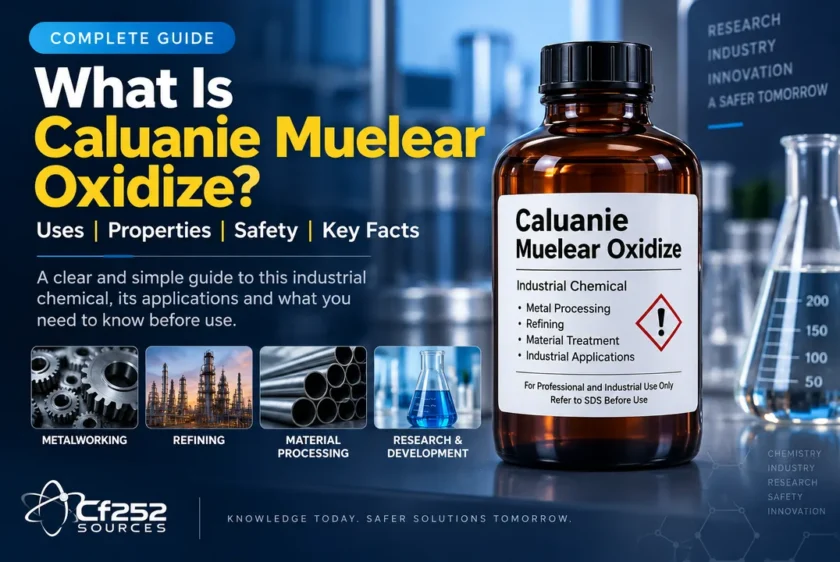
Caluanie Muelear Oxidize is a trade-name industrial chemical product marketed for specialized material-processing, metalworking, refining, and related industrial applications. However, the name does not appear to describe one universally standardized chemical composition: different documents and suppliers associate the name with different formulations. For that reason, anyone researching or purchasing this product should identify the specific formulation and verify its current Safety Data Sheet (SDS), Technical Data Sheet (TDS), composition, and regulatory classification before use.
What Is Caluanie Muelear Oxidize?
Caluanie Muelear Oxidize, often shortened to Caluanie or CMO, is a name used in the industrial chemical marketplace for a specialized liquid product.
Online descriptions commonly associate it with:
- Metalworking
- Industrial material processing
- Refining
- Chemical processing
- Surface and material treatment
- Laboratory or technical research
However, there is an important point that buyers should understand: “Caluanie Muelear Oxidize” is not a sufficiently precise chemical identification by itself.
Current technical documents available online do not all agree on its composition. For example, a 2026 technical data sheet describes the product as an industrial liquid oxidizer for metalworking, refining, and processing, while another SDS published online lists a substantially different composition.
This means the product’s actual properties should be established from documentation supplied for the specific batch and manufacturer.
What Is Caluanie Used For?
Products sold under the Caluanie Muelear Oxidize name are marketed for various industrial applications.
Current supplier documentation identifies areas such as:
- Metalworking
- Refining
- Industrial processing
- Material treatment
- Chemical processing
- Research and testing
Some commercial descriptions also associate the product with metal processing and the treatment or removal of coatings and other materials. These claims vary considerably between suppliers, so they should be evaluated against the manufacturer’s technical documentation rather than treated as universal properties of every product sold under the name.
Why Is the Product Difficult to Identify?
One of the biggest problems when researching Caluanie Muelear Oxidize is inconsistent information online.
Different websites may provide different:
- Chemical formulas
- CAS numbers
- Ingredients
- Physical properties
- Hazard classifications
- Recommended applications
- Product names
- Purity claims
This makes it risky to identify a product based only on a webpage title.
A professional buyer should instead ask for the current SDS and TDS for the exact product being supplied.
Is Caluanie Muelear Oxidize a Single Chemical?
The answer is not straightforward.
The commercial name is used in different ways by different suppliers. A recent 2026 supplier SDS identifies Caluanie Muelear Oxidize as an industrial product and provides a specific product classification and recommended industrial uses. Other documents found online provide different chemical information.
Therefore, it is better to treat Caluanie Muelear Oxidize as a commercial product name that requires product-specific identification, rather than assuming that every product carrying the name has exactly the same chemical composition.
What Does Caluanie Muelear Oxidize Look Like?
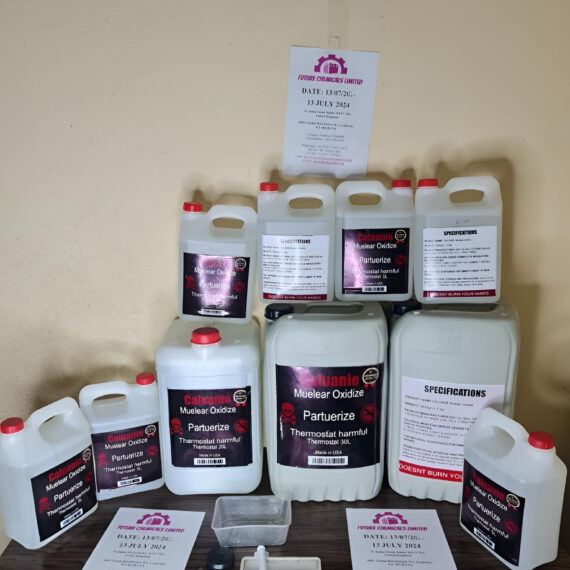
Descriptions vary depending on the particular formulation.
A current 2026 technical data sheet describes the product as a liquid industrial oxidizer. Other commercial descriptions characterize it as a clear-to-amber or amber-colored liquid.
Appearance alone, however, is not enough to identify a chemical.
Color, viscosity, odor, density, and other physical characteristics should be taken from the current documentation for the specific product.
Industrial Applications of Caluanie Muelear Oxidize
Metal Processing
One of the most common claims associated with Caluanie Muelear Oxidize is its use in metal-processing applications.
Commercial descriptions market it for specialized metalworking and refining processes. The exact role of the product depends on its formulation and the industrial process in which it is being used.
Because different suppliers may sell products under the same trade name, industrial users should verify that the material has been tested and documented for their intended application.
Refining and Material Processing
Current technical documentation identifies refining and industrial processing among the intended application areas for the product.
The precise process should be determined by qualified technical personnel using the manufacturer’s documentation.
Surface and Coating Treatment
Some suppliers market Caluanie products for specialized treatment or removal of coatings and other materials. These claims are not necessarily applicable to every formulation sold under the Caluanie name, so product-specific technical documentation is important.
Research and Testing
Some commercial sources also describe research and material-testing applications.
Where a product is being considered for laboratory research, researchers should establish its exact composition, hazards, purity, and compatibility with the experimental method before use.
Is Caluanie Muelear Oxidize an Oxidizer?
The answer depends on the specific formulation.
The current 2026 UE Chemicals technical data sheet describes its product as an industrial liquid oxidizer.
However, because other products sold under the same trade name have different published specifications, the word “oxidizer” should not be assumed to describe every Caluanie product without checking its current SDS.
The safest approach is to use the hazard classification and transport information supplied for the actual product and batch.
Is Caluanie Muelear Oxidize Dangerous?
A chemical’s hazards depend on its actual composition and concentration.
Available SDS documents associated with products sold as Caluanie Muelear Oxidize identify hazards involving exposure and handling. One published SDS, for example, warns about ingestion, inhalation, eye exposure, and keeping the material away from ignition sources.
Because the online documentation is inconsistent, users should never rely on a generic internet description to determine the hazards of a particular Caluanie product.
Before handling it, review the current SDS supplied by the manufacturer or distributor.
How Should Caluanie Muelear Oxidize Be Handled?
Handling requirements depend on the exact formulation.
Before using a product sold under the Caluanie name, workers should review:
- Safety Data Sheet
- Hazard classification
- Required personal protective equipment
- Storage conditions
- Ventilation requirements
- Spill procedures
- First-aid information
- Fire-response information
- Waste-disposal requirements
- Transportation classification
The current SDS available from UE Chemicals, for example, follows the standard 16-section SDS format and specifically states that certain transport or classification information should be confirmed against the current batch SDS and shipment route.
Why Is the SDS Important?
The Safety Data Sheet (SDS) is one of the most important documents to obtain when evaluating Caluanie Muelear Oxidize.
It can provide information about:
- Product identification
- Composition
- Hazards
- First aid
- Fire-fighting measures
- Accidental-release measures
- Handling
- Storage
- Exposure controls
- Personal protection
- Physical properties
- Stability
- Toxicological information
- Disposal
- Transport
- Regulatory information
A professional chemical supplier should be able to provide the appropriate current documentation for the product being supplied.
What Should You Check Before Buying Caluanie Muelear Oxidize?
If you are evaluating Caluanie Muelear Oxidize for a legitimate industrial or research application, don’t rely solely on the product name.
Check the following:
1. Exact Product Identity
Ask the supplier to clearly identify the product and manufacturer.
2. Current SDS
Obtain the current Safety Data Sheet before purchase or use.
3. Technical Data Sheet
The TDS should explain the product’s technical specifications and intended applications.
4. Composition
Where applicable, verify the composition or ingredient information provided by the manufacturer.
5. Batch Information
For professional applications, batch or lot identification can help with traceability.
6. Regulatory Status
Check whether the product has restrictions in the country where it will be used.
7. Transportation Requirements
Hazardous chemical transportation can involve specific packaging, labeling, carrier, and documentation requirements.
8. Intended Application
Confirm that the supplier’s stated use is appropriate for your particular industrial or research process.
Caluanie Muelear Oxidize vs. “Heavy Water”
Another source of confusion is the term “heavy water.”
Some websites use “heavy water” as a nickname or alternative marketing term for Caluanie Muelear Oxidize. However, this should not be confused with nuclear heavy water, which is water enriched in deuterium and has completely different chemical properties and uses.
When discussing the product professionally, using its exact product identification and manufacturer documentation is much safer than relying on informal names.
Why Online Information About Caluanie Can Be Confusing
Search results for Caluanie Muelear Oxidize contain a mixture of supplier pages, commercial blogs, copied SDS documents, and other material.
Some sources make very specific claims about composition and applications without providing enough supporting documentation.
For example, one current supplier page describes Caluanie as an industrial product for metalworking, refining, and processing, while another online SDS provides a different ingredient profile.
This is why a professional buyer should treat search-engine content as a starting point rather than as a substitute for the manufacturer’s documentation.
Who Uses Caluanie Muelear Oxidize?
Products marketed under this name are generally aimed at specialized industrial users.
Potential user groups described by current commercial sources include:
- Metal-processing businesses
- Industrial manufacturers
- Refining operations
- Material-processing companies
- Chemical-processing organizations
- Research laboratories
- Technical testing facilities
The actual suitability of a product depends on its specific formulation and the application.
Is Caluanie Muelear Oxidize a Laboratory Chemical?
It can be marketed for research and laboratory-related applications, but the term laboratory chemical does not by itself establish a particular grade or purity.
Laboratories should determine whether the product meets the requirements of their experimental procedure by checking the actual specification, composition, purity information, SDS, and TDS.
A research application may require a much more precisely characterized material than an industrial process.
Conclusion
Caluanie Muelear Oxidize is a commercial name used for specialized industrial chemical products associated with metalworking, refining, material processing, and related applications. The most important thing to understand is that information published online is inconsistent: products carrying the same name can have different stated compositions and specifications.
If you are researching Caluanie Muelear Oxidize for industrial or scientific purposes, always identify the specific manufacturer and formulation and review the current SDS and TDS before evaluating its suitability.
Frequently Asked Questions
What is Caluanie Muelear Oxidize?
Caluanie Muelear Oxidize is a trade name used for specialized industrial chemical products marketed for applications including metalworking, refining, and material processing. Its exact composition should be confirmed from the documentation for the specific product.
What is Caluanie Muelear Oxidize used for?
Commercial sources associate it with metalworking, refining, industrial processing, material treatment, and some research applications. The precise use depends on the product formulation and manufacturer’s technical specifications.
Is Caluanie Muelear Oxidize a single chemical?
Not necessarily. The name is used commercially for products whose published compositions and specifications can differ. A current SDS and TDS should therefore be checked for the exact product.
Is Caluanie Muelear Oxidize dangerous?
It can present chemical hazards depending on its formulation. Users should review the current SDS for the specific product before handling it and follow the manufacturer’s safety instructions.
Is Caluanie Muelear Oxidize the same as heavy water?
No. The term “heavy water” is sometimes used commercially for Caluanie products, but nuclear heavy water is a completely different substance. The two should not be confused.
What documents should a supplier provide?
For professional chemical sourcing, useful documentation can include a current SDS, Technical Data Sheet, product specification, batch information, and applicable regulatory or transportation documentation.
Why do websites give different information about Caluanie Muelear Oxidize?
The trade name appears to be used for different products or formulations, and some websites reproduce older or inconsistent information. This is why product-specific manufacturer documentation is important.
Is Caluanie Muelear Oxidize used in metal processing?
Yes, commercial sources commonly market it for specialized metalworking and processing applications. The exact function depends on the formulation and industrial process.
Can Caluanie Muelear Oxidize be used for research?
Some commercial sources describe research and testing applications. Researchers should first establish the exact composition, specification, hazards, and suitability of the particular product for their experimental procedure.
How can I identify a genuine Caluanie Muelear Oxidize product?
Do not rely only on the product name, label, or website description. Request the manufacturer’s current SDS, TDS, product identification, composition information where applicable, and batch documentation, then verify that the documents correspond to the actual material being supplied.
