
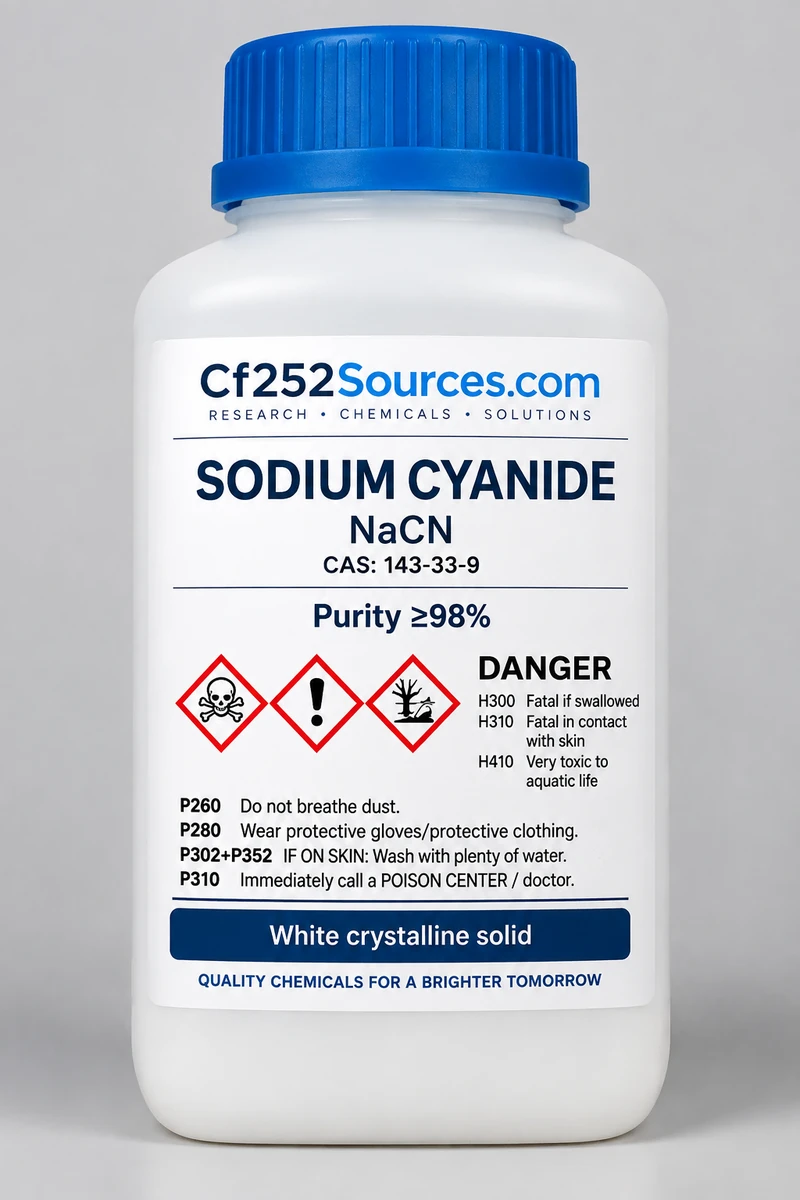
Buy Sodium Cyanide (NaCN) — Product Information
Sodium cyanide (NaCN) is a highly toxic inorganic chemical used primarily in professional industrial applications such as precious-metal extraction, electroplating, metal treatment, and chemical manufacturing. Because sodium cyanide presents severe poisoning hazards and is regulated in many jurisdictions, its handling, storage, transportation, and supply require appropriate controls, trained personnel, and compliance with applicable laws.
Sodium Cyanide Product Overview
Sodium cyanide is an inorganic cyanide salt with the chemical formula NaCN. It is commonly encountered as a white crystalline or solid material and is widely recognized for its strong ability to form complexes with certain metals.
| Property | Information |
|---|---|
| Product | Sodium Cyanide |
| Chemical formula | NaCN |
| CAS Number | 143-33-9 |
| Molecular weight | 49.01 g/mol |
| Appearance | White crystalline solid |
| Chemical class | Inorganic cyanide salt |
| Main applications | Mining, metal treatment, electroplating, chemical manufacturing |
| Supply | Subject to applicable regulatory requirements |
Industrial Applications of Sodium Cyanide
Gold and Precious-Metal Processing
Sodium cyanide has an important historical and industrial role in the extraction of gold and other precious metals because cyanide ions can form soluble complexes with metals.
Professional mining operations use controlled chemical-processing systems designed specifically for cyanide management.
Electroplating
Sodium cyanide has been used in certain electroplating and metal-finishing processes where cyanide chemistry is required for controlled metal deposition.
Modern facilities must follow applicable workplace, environmental, and hazardous-material regulations when using cyanide compounds.
Metal Treatment
Cyanide chemistry has applications in some specialized metal-treatment and surface-finishing processes.
These applications require appropriately designed industrial equipment and trained personnel because accidental exposure can have severe consequences.
Chemical Manufacturing
Sodium cyanide can also serve as an industrial chemical intermediate in certain chemical-production processes.
Its use is generally restricted to controlled professional environments with appropriate chemical-management systems.
Why Sodium Cyanide Requires Strict Controls
Sodium cyanide is extremely toxic. Exposure can occur through ingestion, inhalation, or contact with contaminated material, and serious poisoning can occur rapidly.
Cyanide compounds can interfere with the body’s ability to use oxygen at the cellular level. Under certain conditions, cyanide-containing materials can also result in the formation of hydrogen cyanide (HCN), which is highly toxic.
For these reasons, sodium cyanide should only be handled by appropriately trained professionals using suitable engineering controls, personal protective equipment, emergency procedures, and regulatory safeguards.
Storage and Handling
Professional facilities handling sodium cyanide should follow the applicable Safety Data Sheet (SDS) and local hazardous-material requirements.
Important considerations include:
- Controlled access to storage areas
- Appropriate chemical labeling
- Suitable containment
- Protection from incompatible materials
- Adequate ventilation and engineering controls
- Trained personnel
- Emergency-response procedures
- Appropriate hazardous-material transportation controls
- Proper waste management
The applicable SDS and local regulations should always determine the exact handling and storage requirements.
Professional Supply and Regulatory Information
Because sodium cyanide is a highly hazardous and regulated chemical, supply is not treated as an unrestricted consumer chemical purchase.
Professional organizations seeking sodium cyanide should establish that their intended application, facilities, personnel, documentation, transportation arrangements, and regulatory permissions meet the requirements applicable to their jurisdiction.
Cf252 Sources provides professional chemical information and enquiry-based supply support subject to applicable regulatory and safety requirements.
Specific availability, documentation, regulatory requirements, and commercial terms should be confirmed through the appropriate professional enquiry process.
Sodium Cyanide Safety Documentation
Professional users should obtain and review the relevant documentation before handling the material, including applicable:
- Safety Data Sheet (SDS)
- Product specification
- Certificate of Analysis (COA), where applicable
- Transportation documentation
- Regulatory documentation
- Handling and storage information
Documentation requirements can vary depending on the jurisdiction and intended industrial application.
Sodium Cyanide vs Potassium Cyanide
Sodium cyanide and potassium cyanide are different chemical compounds, although both contain the cyanide ion.
- Sodium cyanide: NaCN
- Potassium cyanide: KCN
Both substances require strict professional controls because cyanide toxicity is a major safety concern.
Frequently Asked Questions
What is sodium cyanide?
Sodium cyanide is an inorganic cyanide salt with the chemical formula NaCN. It is used in several specialized industrial processes, particularly precious-metal processing and certain metal-finishing applications.
What is the CAS number of sodium cyanide?
The CAS number for sodium cyanide is 143-33-9.
What is sodium cyanide used for?
Major industrial applications include precious-metal processing, electroplating, specialized metal treatment, and chemical manufacturing.
Is sodium cyanide dangerous?
Yes. Sodium cyanide is extremely toxic and can cause severe or fatal poisoning following significant exposure.
Can sodium cyanide release hydrogen cyanide?
Under certain chemical conditions, cyanide compounds can result in the formation or release of hydrogen cyanide. This is one reason cyanide materials require strict professional controls.
Who should handle sodium cyanide?
Sodium cyanide should only be handled in appropriately controlled professional environments by personnel who are trained and authorized to work with highly toxic chemicals.
Is sodium cyanide regulated?
Requirements vary by country and application, but sodium cyanide is subject to significant hazardous-chemical, occupational-safety, transportation, and environmental controls in many jurisdictions.
Can I request information about sodium cyanide from Cf252 Sources?
Professional organizations can make an enquiry regarding product information, documentation, regulatory requirements, and suitability for a legitimate industrial application. Any supply is subject to applicable legal and safety requirements.

Reviews
There are no reviews yet.