
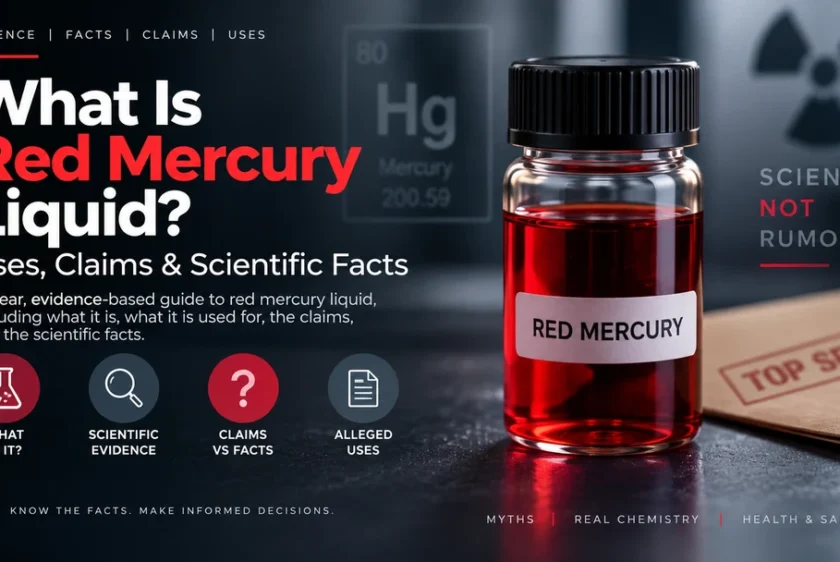
Red mercury is a term that has appeared in media reports, alleged trading offers, military stories, and nuclear-related claims for decades.
Descriptions of the supposed material have varied significantly. It has been described as:
- A red or dark-red liquid
- A dense liquid or semi-liquid
- A special mercury compound
- A nuclear-related material
- A secret military material
- A substance supposedly connected with nuclear weapons
The problem is that these descriptions do not correspond to a single scientifically established chemical substance.
The Irish Parliament recorded in 1993 that the existence and alleged properties of red mercury were controversial and that there was no conclusive evidence of red mercury as a unique substance with the claimed nuclear applications. The same parliamentary record noted that known mercury compounds had been offered for sale in fraudulent transactions.
Is Red Mercury Real?
The answer depends on what someone means by “red mercury.”
There are certainly real red-colored mercury compounds. However, the mysterious substance described in popular red-mercury stories has not been established as a unique chemical with the extraordinary properties attributed to it.
A particularly important scientific investigation examined an object seized in Zagreb in 2003 after it was suspected of containing red mercury.
Researchers used neutron activation analysis and energy-dispersive X-ray fluorescence to examine the material. The analysis found that the material inside the capsule was mercury, while iron, chromium, and nickel were associated with the capsule itself. Antimony, which had been proposed in some descriptions of red mercury, was not detected in the contents.
The researchers also noted that earlier alleged red-mercury samples had been identified as known mercury-containing substances.
What Is Red Mercury Liquid Used For?
This is one of the most common questions surrounding the topic.
The supposed red mercury has no verified special use
There is no scientifically established evidence that a unique “red mercury liquid” has the extraordinary nuclear, explosive, energy-related, or other secret applications sometimes claimed online.
Historical claims have associated red mercury with:
- Nuclear weapons
- Fusion weapons
- Secret military technology
- Nuclear triggering systems
- Extremely powerful explosives
- Specialized weapons technology
However, these claims have not been supported by publicly available scientific evidence establishing a unique red-mercury material and demonstrating these applications.
The UK Parliament recorded in 1994 that the government had no evidence of red mercury having potential uses in nuclear weapons.
The IAEA has also been associated with investigations into alleged red-mercury cases. An IAEA publication discussing European cases stated that cases involving the substance called red mercury were considered fraud because the substance could not be identified.
Real red mercury compounds are different
The phrase “red mercury” can also be used incorrectly to describe genuine red-colored mercury compounds.
Examples include:
- Mercury(II) sulfide
- Mercury(II) oxide
- Mercury(II) iodide
These are chemically different substances and should be identified by their actual chemical names rather than being treated as the mysterious substance described in red-mercury stories.
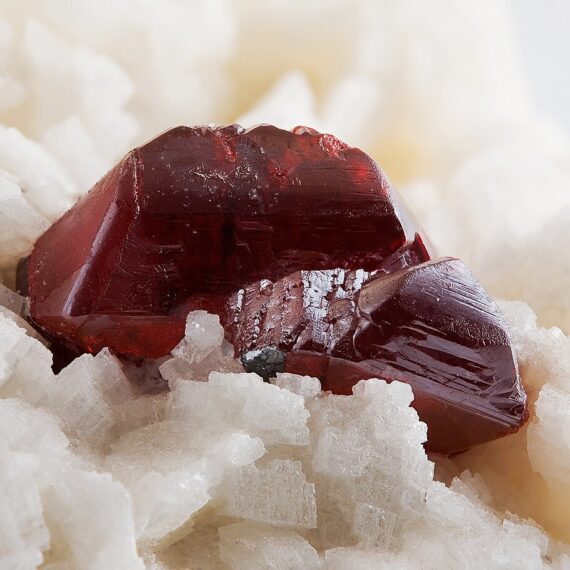
For example, mercury(II) sulfide is associated with the mineral cinnabar, a naturally occurring red mercury-containing mineral. Its historical uses include pigment production.
That does not mean cinnabar is the mysterious “red mercury” described in nuclear-related stories.
Why Is Red Mercury Called a Liquid?
Many accounts describe red mercury as a red, dark-red, or cherry-red liquid.
However, the physical description is inconsistent.
Different alleged samples have reportedly appeared as:
- Liquids
- Powders
- Mixtures
- Solid materials
- Material contained inside metal capsules
This inconsistency is another reason that the term cannot be treated as the name of a specific chemical compound.
A real chemical substance should have a definable chemical identity, such as a formula, molecular structure, CAS number, measurable physical properties, and reproducible analytical characteristics.
“Red mercury” does not provide that information by itself.
Red Mercury and Nuclear Weapons
One of the biggest reasons the red-mercury story became famous was its alleged connection with nuclear weapons.
Various stories claimed that red mercury could be used in highly advanced nuclear or fusion weapons.
These claims generated significant media attention during the late 20th century.
However, official statements and scientific investigations did not establish red mercury as a verified nuclear-weapons material.
The UK Parliament discussed the issue in 1994 and reported that there was no evidence supporting the alleged nuclear-weapons applications.
An Irish parliamentary answer from 1993 similarly stated that there was no conclusive evidence for red mercury as a unique substance with nuclear-weapons applications and noted that known mercury compounds had apparently been offered in fraudulent transactions.
Why Did the Red Mercury Story Become So Popular?
There are several reasons the story attracted attention.
1. Secrecy surrounding nuclear technology
Nuclear weapons programs are highly classified, making claims about secret nuclear materials difficult for the public to evaluate.
2. Cold War history
The story became strongly associated with the former Soviet Union and claims about secret military technology.
3. High claimed value
Some alleged sellers claimed that red mercury was extremely valuable.
This created an incentive for fraudulent offers aimed at people who believed they were purchasing secret nuclear material.
4. Lack of a clear chemical identity
Because different stories gave different descriptions, the mystery could continue without a consistent substance being produced for independent verification.
5. Media attention
Reports about alleged nuclear materials, terrorism, weapons, and secret technology helped spread the story internationally.
Red Mercury vs Real Mercury Compounds
It is important to distinguish the mysterious term red mercury from actual mercury compounds.
| Term | Scientific status | Description |
|---|---|---|
| “Red mercury” | No unique established identity | Term used in various claims and alleged transactions |
| Mercury | Real chemical element | Metallic element, chemical symbol Hg |
| Mercury(II) sulfide | Real compound | Mercury-containing compound that can be red |
| Mercury(II) oxide | Real compound | Known mercury compound with red/yellow forms |
| Mercury(II) iodide | Real compound | Known mercury compound that can appear red |
This distinction is important when researching chemical products or technical information.
A product should not be identified simply as “red mercury.” A legitimate chemical specification should identify the actual substance.
What Chemicals May Be Confused With Red Mercury?
Several real substances can contribute to confusion around the term.
Mercury(II) Sulfide
Mercury(II) sulfide is a genuine mercury compound and is associated with the mineral cinnabar.
Its red coloration may explain some historical references to a “red mercury” material.
Mercury(II) Iodide
Mercury(II) iodide is another genuine mercury compound that can have a red appearance.
It has a defined chemical identity and should not be confused with the alleged secret material called red mercury.
Mercury(II) Oxide
Mercury(II) oxide also exists in colored forms and has established chemical properties.
Again, it is a known compound rather than evidence for the mysterious red-mercury claims.
How Were Alleged Red Mercury Samples Tested?
Scientific analysis is important because color and appearance cannot establish chemical identity.
Researchers investigating alleged red mercury can use analytical techniques such as:
- Elemental analysis
- X-ray fluorescence
- Neutron activation analysis
- Spectroscopic techniques
- Chemical characterization
- Radiological measurements
In the Zagreb investigation, researchers used neutron activation analysis and EDXRF. Their findings indicated that the material inside the investigated object was mercury, while the capsule contained other metals.
This illustrates an important principle in chemical identification: a substance’s claimed name is not proof of its chemical composition.
Is Red Mercury Radioactive?
The answer cannot simply be “yes” because “red mercury” does not identify one established substance.
Some historical stories describe red mercury as radioactive or nuclear-related. Other alleged samples were found to contain ordinary mercury.
In the Zagreb investigation, the investigated object initially tested negative for radioactivity, and subsequent analysis identified mercury in the contents.
Therefore, the term “red mercury” should not be treated as synonymous with a radioactive material.
Is Red Mercury Dangerous?
Mercury and many mercury compounds can be hazardous.
However, the safety properties of a chemical depend on its actual identity, concentration, physical form, and exposure route.
A product described only as “red mercury” does not provide enough information to determine its chemical hazards.
For legitimate chemical work, buyers and laboratories should rely on:
- Exact chemical name
- CAS number
- Chemical formula
- Safety Data Sheet (SDS)
- Certificate of Analysis (COA)
- Manufacturer information
- Appropriate hazard classification
Unknown mercury-containing materials should not be handled casually.
How Can You Identify a Genuine Chemical Product?
If a chemical is being offered commercially, a professional buyer should request clear documentation.
Important information includes:
Chemical name
The product should have a specific chemical identity rather than only a nickname.
CAS number
A CAS number can help distinguish chemically different substances.
Chemical formula
The molecular formula provides important information about composition.
Safety Data Sheet
An SDS provides information about hazards, handling, storage, transportation, and emergency measures.
Certificate of Analysis
A COA can provide batch-specific analytical information when supplied by a legitimate manufacturer or laboratory.
Independent testing
For unusual or high-value chemical claims, independent analytical testing can be important.
Red Mercury Liquid: Myth vs Scientific Evidence
| Common Claim | Scientific Perspective |
|---|---|
| Red mercury is a unique secret chemical | No unique chemical identity has been established |
| Red mercury is a nuclear-weapons material | No publicly established evidence demonstrates this |
| Red mercury has extraordinary explosive properties | Not scientifically established |
| Red mercury is always radioactive | Alleged samples have not consistently shown this |
| Red mercury is a specific mercury compound | Different real mercury compounds have been associated with the name |
| Red mercury is extremely valuable | High-value claims have been associated with fraudulent transactions |
| Red mercury has verified commercial applications | No verified special applications have been established for the alleged substance |
Why Chemical Identity Matters
The story of red mercury demonstrates why chemical identification is important.
Two materials may look similar but have completely different:
- Chemical formulas
- Molecular structures
- Hazards
- Physical properties
- Industrial applications
- Regulatory requirements
A red-colored material should therefore not be identified as “red mercury” simply because of its appearance.
Professional chemical purchasing should always be based on a verified chemical identity and appropriate documentation.
Frequently Asked Questions
What is red mercury liquid?
“Red mercury liquid” is a term associated with alleged secret nuclear or military material, but no unique substance matching those claims has been scientifically established. Investigations of alleged samples have identified known mercury-containing materials instead.
What is red mercury liquid used for?
There are no scientifically verified special uses for the supposed red mercury substance. Claims that it is used for nuclear weapons or extraordinary military technology have not been established by reliable public scientific evidence.
Is red mercury a real chemical?
There are real red-colored mercury compounds, but “red mercury” does not identify one unique, scientifically established chemical substance.
Is red mercury used in nuclear weapons?
There is no established public scientific evidence demonstrating that a substance called red mercury has a nuclear-weapons application. Historical government discussions and scientific investigations have not verified the claim.
Is red mercury radioactive?
Not necessarily. Because “red mercury” does not identify a specific substance, radioactivity cannot be assumed from the name. An investigated alleged sample in Zagreb tested negative for radioactivity.
Is cinnabar red mercury?
No. Cinnabar is a genuine mineral consisting primarily of mercury(II) sulfide. Although it is red and contains mercury, it should not be confused with the alleged secret substance called red mercury.
Why is red mercury associated with nuclear weapons?
The association comes from decades of reports and claims concerning secret Soviet-era military technology and alleged nuclear applications. These claims generated considerable attention, but the existence of a unique red-mercury nuclear material has not been established.
Can the name “red mercury” identify a chemical?
No. A reliable chemical identification requires more information, such as a specific chemical name, formula, CAS number, and analytical documentation.
Are red mercury scams real?
Authorities and scientific investigations have documented fraudulent offers involving substances claimed to be red mercury. The Irish parliamentary record specifically noted that known mercury compounds appeared to have been offered for sale fraudulently.
What should a professional buyer check?
A professional buyer should verify the exact chemical identity, CAS number, SDS, COA, manufacturer information, and applicable regulatory requirements rather than relying on the name “red mercury.”
Conclusion
Red mercury liquid is one of the most persistent chemical myths associated with nuclear technology. While genuine red-colored mercury compounds certainly exist, there is no established scientific evidence that a unique substance called “red mercury” possesses the extraordinary properties often attributed to it.
So, when asking what is red mercury liquid used for, the scientifically supported answer is that no verified special use has been established for the alleged substance. Historical investigations of supposed red-mercury samples have instead found known mercury or other identifiable materials.
For legitimate chemical research and purchasing, the most important step is to identify the actual chemical involved and verify it through appropriate technical and safety documentation.


1 Comment
[…] Potassium permanganate is a dark purple, crystalline chemical compound that acts as a powerful oxidizing agent. This means it readily gives up oxygen to other substances, which makes it incredibly effective at killing bacteria, removing bad smells, and breaking down organic contaminants. You might recognize it by its distinct deep purple color when dissolved in water. […]